Extracting precious metals from tailings is a complex field with significant economic and environmental value. Due to the complex composition of tailings and the fact that their precious metal grades are typically much lower than those of the ore, the processing flow needs to be more targeted, efficient, and cost-effective. The following is a detailed description of the process flow using tailings containing coarse-grained free gold as an example:
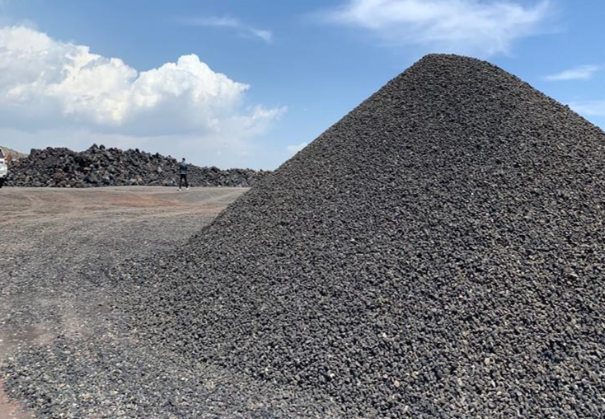
I. Pretreatment and Slurry Preparation: First, the material in the tailings dam is excavated and transported. Then, water is added to the mixing tank or slurry preparation tank to prepare the dry or concentrated tailings into a slurry of appropriate concentration, ensuring smooth feeding in subsequent processes.
II. Core Separation - Gravity Separation:
Equipment Selection: Primarily using shaking tables or centrifugal concentrators.
Working Principle: Utilizing the significant density difference between gold and gangue minerals (such as quartz and feldspar). Under the combined action of water flow and mechanical vibration, the heavier gold particles settle to the bottom of the equipment and are collected, while the lighter gangue minerals are washed away by the water flow, thus achieving effective separation.
Output: High-grade gold concentrate is obtained.
III. Product Processing - Direct Smelting: Since the gold concentrate obtained by gravity separation has a high grade and the gold is in a free state, it can be directly mixed with flux (such as borax and soda ash) and smelted in a crucible furnace or a small incinerator.
After smelting, the gangue forms slag, while gold, due to its high density and incompatibility, settles to the bottom of the crucible to form gold ingots.
In summary, this process is the optimal choice for treating this type of tailings because it requires less investment, yields quick results, is simple to operate, and produces no cyanide pollution. It is particularly suitable for tailings treatment projects in small and medium-sized enterprises or remote areas.