



NEWS&EVENTS
Home > News&Events > Company news > Pyrometallurgical Antimony Refining: Why the Rotary Furnace Became the Key Choice
Antimony, as an important strategic metal, has wide applications in many fields such as electronics, chemicals, and metallurgy, and its importance is self-evident. Currently, pyrometallurgical antimony refining has become the mainstream process for antimony smelting due to its advantages such as high efficiency and maturity, among which the "volatilization roasting-reduction smelting" method is the most widely used.
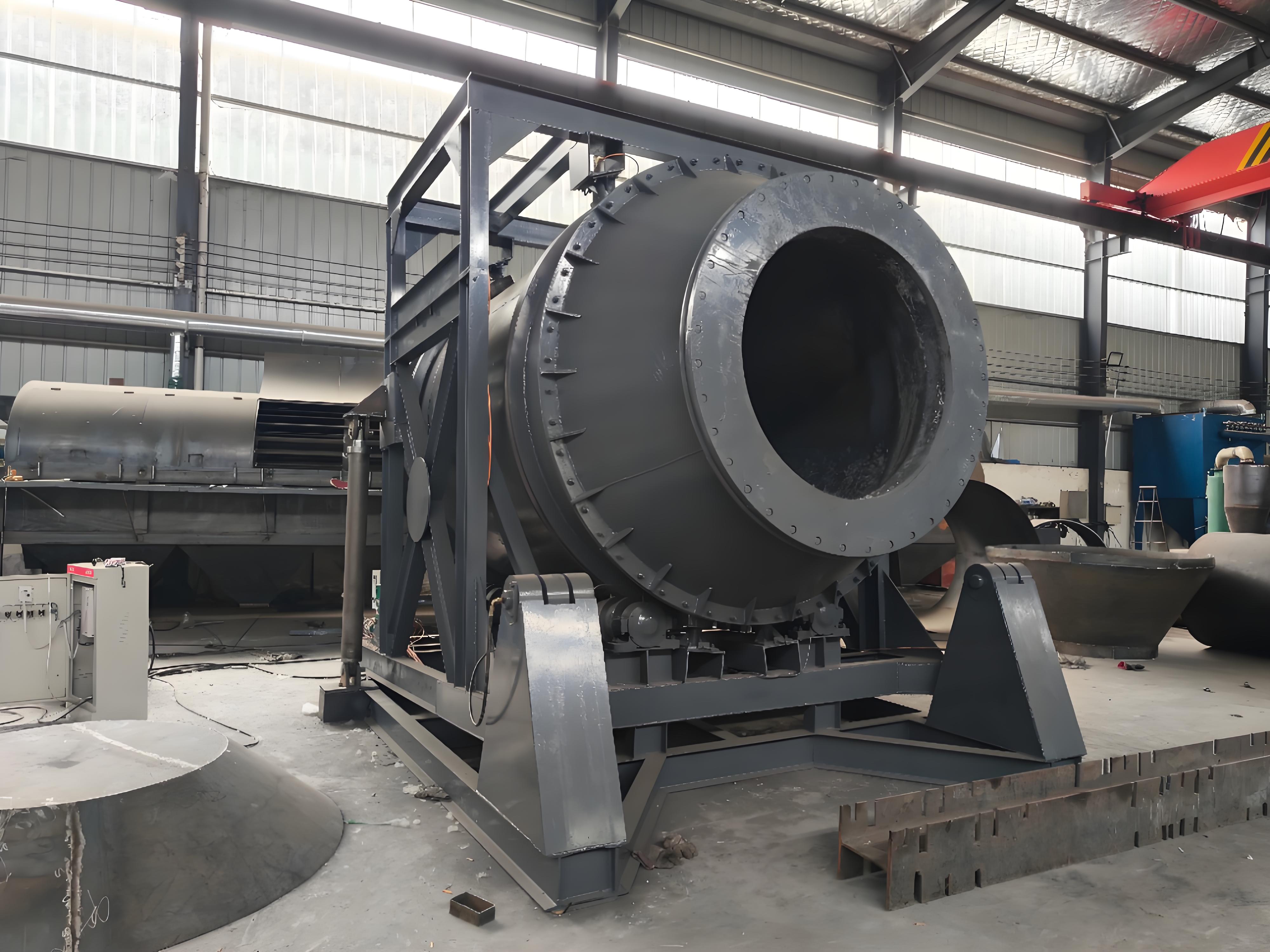
In the pyrometallurgical antimony smelting process, the rotary kiln plays a crucial role in connecting the preceding and following stages. The antimony oxide powder (Sb?O?) produced in the previous stage needs to be smelted and reduced in the rotary kiln to ultimately produce crude antimony. This process is critical and directly affects the yield and quality of antimony.
The rotary kiln occupies a central position in pyrometallurgical antimony refining due to its significant advantages over traditional crucible furnaces and reverberatory furnaces. Firstly, it possesses the capability for continuous production. Traditional furnaces often require intermittent operation, with frequent start-ups and shutdowns, resulting in low efficiency and increased energy consumption and costs. The rotary kiln, however, can achieve uninterrupted operation, greatly improving production efficiency and meeting the demands of large-scale industrial production.
Secondly, rotary kilns are highly mechanized. They are equipped with advanced automated control systems that can precisely control key parameters such as temperature and atmosphere, reducing human interference in the production process and ensuring stable product quality. At the same time, mechanized operation reduces the labor intensity of workers and improves the working environment.
Furthermore, the rotary kiln boasts a high recovery rate. It enables the full reduction of antimony in antimony-oxygen powder, reducing metal loss and improving resource utilization. Moreover, its excellent sealing effectively reduces the leakage of harmful gases, and combined with advanced exhaust gas treatment equipment, it significantly reduces environmental pollution, making it highly environmentally friendly.
For this reason, the rotary kiln, with its many advantages, has established an irreplaceable position in the modern antimony industry and has become the ideal choice for pyrometallurgical antimony refining.