



NEWS&EVENTS
Home > News&Events > Company news > Advantages and limitations of crude antimony slag formation purification method
Slag-forming, a key refining technology in pyrometallurgy, is of great significance in the antimony smelting and refining stage. Its essence is to purify crude antimony by chemically transforming and physically separating impurities. This method has both obvious advantages and limitations.
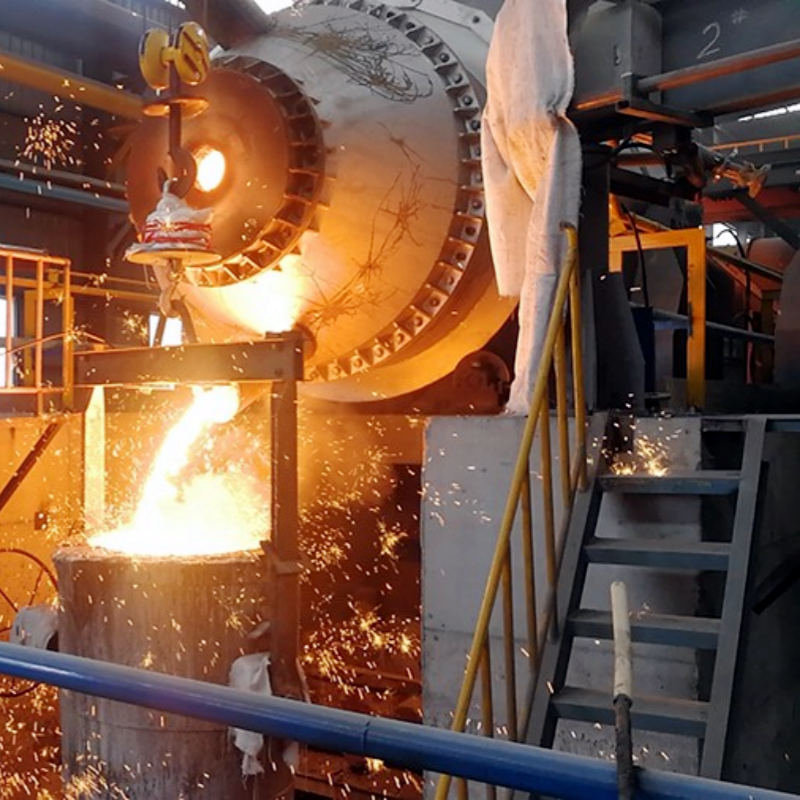
In terms of advantages, firstly, the technology is highly mature. As a classic pyrometallurgical refining method, it has been proven through long-term practice, demonstrating stable and reliable processes that provide a solid guarantee for large-scale production. Secondly, its strong targeting is a prominent feature. It can remove different impurities step by step and in a targeted manner, selecting appropriate slagging agents based on the characteristics of the impurities for precise targeting and effective improvement of antimony purity. Thirdly, the cost is relatively low. Compared with advanced methods such as vacuum metallurgy, the slagging method is more economical in terms of equipment and operating costs, suitable for large-scale industrial production, helping to reduce enterprise production costs and improve economic efficiency. Furthermore, high efficiency is also a major highlight. Continuous operation in the molten state allows for the processing of large quantities of crude antimony, meeting the needs of large-scale production and shortening the production cycle.
However, the slag-making method also has certain limitations. On the one hand, it generates solid waste. The sulfur slag and alkali slag produced in the process are hazardous solid wastes. If not properly handled, they can cause serious pollution to environmental elements such as soil and water sources, increasing environmental governance costs and pressure. On the other hand, there is the problem of metal loss. During the slag skimming process, some valuable antimony will inevitably be carried away, leading to a decrease in recovery rate and waste of resources. Moreover, the removal of certain impurities is not thorough; for example, the removal effect on lead is limited, making it difficult to meet the requirements for high-purity antimony products.
Overall, although the crude antimony slag-making purification method is not the final product forming process, it is a core technology to ensure product purity and quality grade and enhance product value.