



NEWS&EVENTS
Home > News&Events > Company news > Working principle of reverberatory furnace for high-grade scrap copper smelting
When a reverberatory furnace is used for smelting high-grade scrap copper, its working principle can be summarized into two parts: basic structure and working process, as follows:
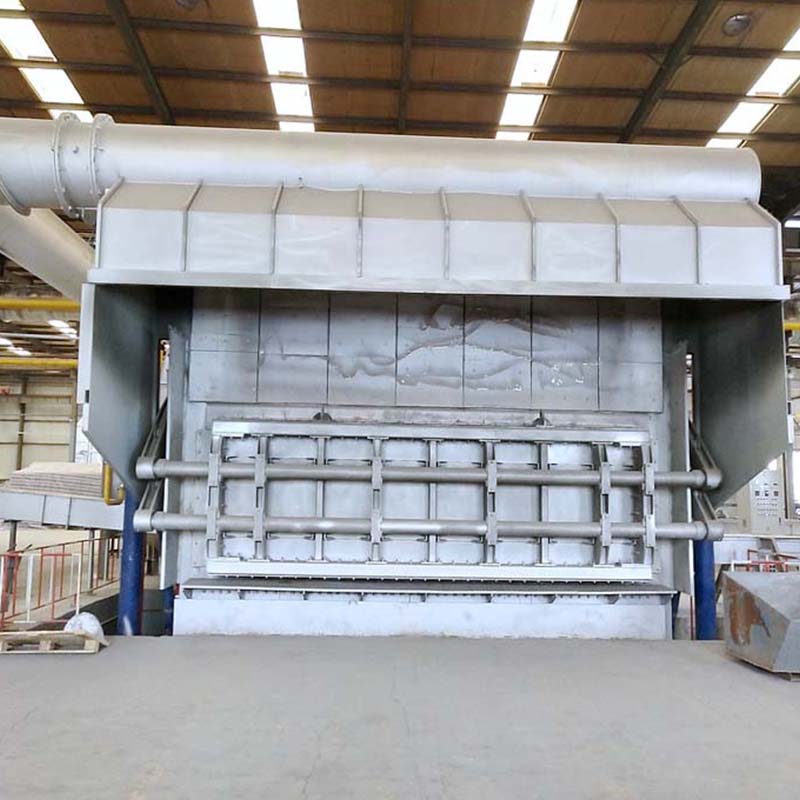
I. Basic Structure
A reverberatory furnace is essentially a rectangular molten pool, consisting of a furnace base, furnace bottom, furnace walls, furnace top, and flue.
Molten pool: Used to hold copper material, lined with refractory bricks to withstand high temperatures and erosion from molten copper.
Combustion system: Installed at one end of the furnace head, using fuel oil, natural gas, or coal gas. The burner sprays flames at a certain angle toward the furnace top, allowing heat to be evenly transferred to the furnace charge through radiation and reflection from the furnace top.
Flue: Located at the tail of the furnace, used to discharge combustion exhaust gas and soot.
Copper tap and slag tap: used to discharge the molten copper and the small amount of slag produced, respectively.
II. Work Process (Taking the production of anode plates as an example)
The processing of high-grade scrap copper in a reverberatory furnace is mainly a melting-refining-casting process.
1. Charging: The packaged high-grade scrap copper is added into the furnace through the charging door on the top of the furnace.
2. Melting: Ignite the burner and use the flame and radiant heat from the furnace top to heat the solid scrap copper until it melts.
3. Oxidation Refining: After all the furnace charge has melted, air or oxygen-enriched air is blown into the molten copper through ducts to remove any remaining impurities from the scrap copper. These impurities are more reactive than copper and will be preferentially oxidized. The oxidation products form slag that floats on the surface of the molten copper, which is then removed by skimming.
4. Reduction Refining: After the oxidation process, excess oxygen (existing in the form of Cu?O) will dissolve in the copper liquid, making the copper brittle. The next step is reduction (also known as "deoxidation"), usually by adding a reducing agent to the copper liquid. The reducing agent will react with Cu?O, reducing it to metallic copper.
5. Tapping and Casting: After adjusting the composition and temperature of the molten copper, open the tapping spout and cast the refined molten copper into anode plates for subsequent electrolytic refining.