



NEWS&EVENTS
The wet refining antimony purification system aims to remove impurity ions from the leachate, ensure the smooth operation of electrolysis, and produce high-purity antimony products. Its key equipment performs its own functions and works closely together.
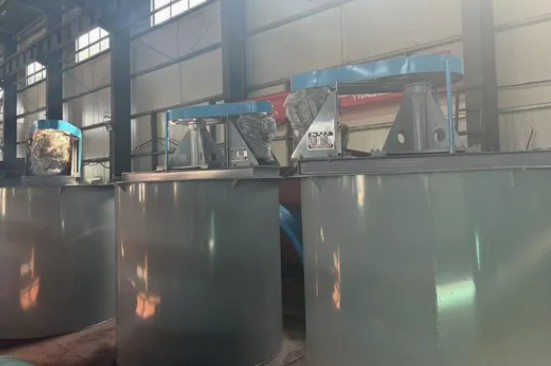
The purification tank/reaction vessel is one of the core pieces of equipment, with a structure similar to that of a leaching tank. During the purification process, specific purifying agents are precisely added based on the characteristics of different impurities. For example, sodium sulfide reacts chemically with lead and copper ions to form insoluble sulfide precipitates, effectively removing lead and copper impurities; an oxidizing agent is added to promote a redox reaction of iron ions, converting them into precipitates for separation. Through these chemical reactions, highly efficient removal of impurities is achieved.
Filter presses are key equipment for solid-liquid separation, with common types including chamber filter presses and plate and frame filter presses. After the purification reaction, the resulting precipitate is mixed with an antimony-containing solution. The filter press, using its high pressure, traps the precipitate on the filter cloth, allowing the pure antimony-containing solution to pass through and flow out, achieving effective separation and providing a qualified solution for subsequent processes.
Solution storage tanks are used to temporarily store solutions before and after purification. Proper solution storage during the purification system's operation balances the processing volume between different stages, ensuring a stable and orderly purification process and ultimately guaranteeing the acquisition of high-purity antimony products.