



NEWS&EVENTS
Home > News&Events > Company news > The core role of rotary furnace in pyrometallurgical tin smelting
Tin pyrometallurgy is a complex and demanding industrial production process, where every step is closely linked and requires no mistakes. The rotary furnace, like a powerful "heart" in this interconnected process, plays a unique and crucial role, continuously injecting power into the entire smelting system and becoming the core equipment that drives the efficient and stable operation of tin pyrometallurgy.
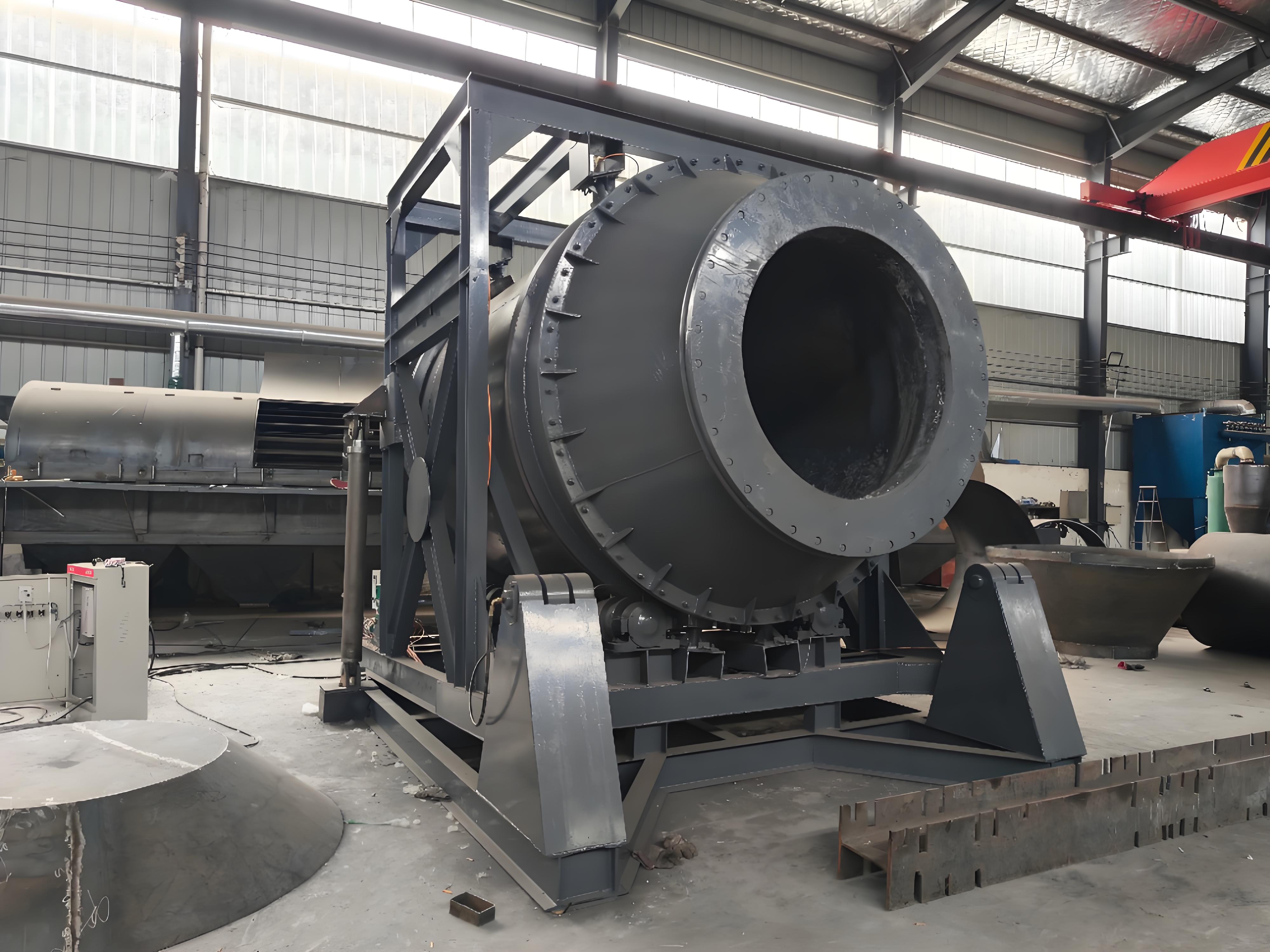
Dynamic smelting is one of the core functions of a rotary furnace. The continuous rotation of the rotary furnace ensures uniform mixing of tin concentrate and reducing agents, such as coke and charcoal. This dynamic mixing significantly accelerates the reduction of tin oxide (SnO?) to metallic tin. At high temperatures of 1200-1300°C, the tin oxide reacts with carbon to produce tin vapor (2SnO? + C → 2Sn + 2CO?↑). This vapor then condenses to form crude tin. This dynamic smelting method overcomes the limitations of traditional static smelting, enabling a more complete and rapid reaction and significantly improving tin production efficiency.
Efficient heat transfer is another major advantage of rotary furnaces. Their unique furnace tilt design, typically at an angle of 3-5°, combined with the rotary motion, allows the material to move slowly along the axial direction. This design cleverly prolongs the material's reaction time within the furnace, ensuring even heat transfer to every part of the material, ensuring stability and efficiency throughout the melting process and significantly improving smelting efficiency.
The rotary kiln also excels in dust control. Equipped with an advanced sealing system, it effectively collects tin-containing dust, such as SnO? and SnS. Through bag filters or electrostatic precipitators, this dust is recycled and reused, achieving a tin recovery rate exceeding 98%, significantly minimizing tin resource loss and environmental pollution.
With its dynamic melting, efficient heat transfer and excellent smoke and dust control capabilities, the rotary furnace has become an indispensable core equipment for pyrometallurgical tin smelting, providing a solid guarantee for the high-quality development of the tin smelting industry.