In today's world of scarce resources and stringent environmental protection requirements, traditional metallurgical processes are facing challenges. Hydrometallurgy, with its high efficiency, environmental protection and excellent processing capabilities for complex low-grade ores, has become the key to the sustainable development of tin smelting. Its core processes are leaching, purification and electrolysis.
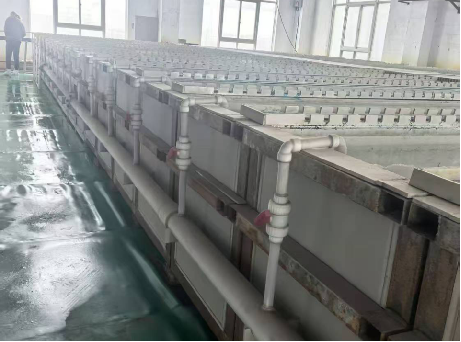
Leaching is the primary step and the key to the initial separation of tin from ore. It utilizes chemical solvents to react with pretreated tin ore, dissolving tin compounds into solution while retaining impurities in the residue. The leaching process requires flexible adjustment for different ores. By selecting the appropriate leaching agent and controlling parameters such as temperature and time, the tin leaching rate can be improved, providing a highly concentrated tin solution for subsequent processes.
The purification step is crucial. The tin-containing solution obtained by leaching contains various impurities, which can affect subsequent electrowinning. Various purification methods exist, such as chemical precipitation, solvent extraction, and ion exchange. In actual production, a combination of these methods is often used to remove impurities and bring the solution to electrowinning purity standards, laying the foundation for electrowinning.
Electrowinning is the final step and determines product quality. It utilizes the principle of electrolysis, using a purified tin-containing solution as the electrolyte. Under the action of direct current, tin ions are reduced to metallic tin at the cathode. Electrowinning requires strict control of current density, electrolyte temperature, and composition to ensure product purity. The purity of the high-purity tin at the cathode can reach over 99.9%.
The core hydrometallurgical process not only efficiently extracts tin resources but also offers significant environmental advantages. It avoids the high-temperature pollution associated with pyrometallurgy, can process complex, low-grade ores, and improves resource utilization. With technological advancements, new leaching agents, efficient purification technologies, and Intelligent electrolytic deposition equipment are constantly emerging, further improving efficiency and quality while reducing costs. In short, hydrometallurgy holds an irreplaceable position in the tin smelting industry. The synergistic effect of its core processes ensures the efficient and green extraction of tin resources and leads the future development of the industry.