



NEWS&EVENTS
Home > News&Events > Company news > Application of stripping agent tank in extraction and purification of electrolytic copper waste liquid
The waste liquid generated during the production of electrolytic copper usually contains copper ions, sulfuric acid, and possibly some impurity metals, such as iron, nickel, and arsenic. Extraction is generally used to treat these waste liquids, because extraction can efficiently recover copper and separate other impurities at the same time.
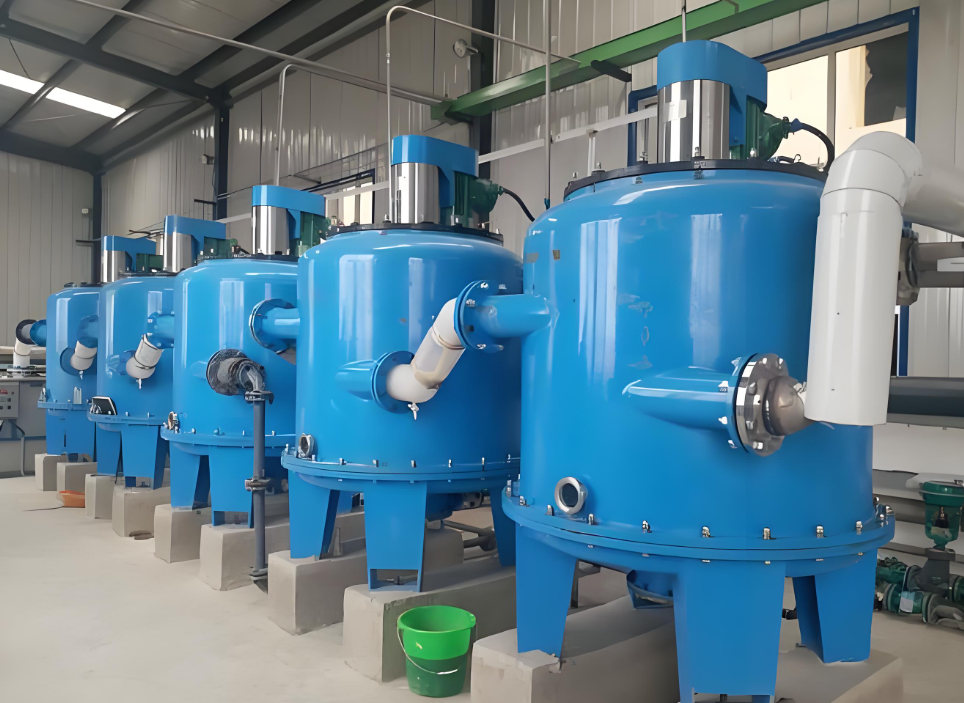
So what role does the stripping agent tank play in this process? The extraction process is usually divided into steps. The first step is the extraction stage, in which copper is transferred from the aqueous phase to the organic phase using an organic extractant. Then stripping is required, that is, transferring copper from the organic phase back to the aqueous phase, so that a high-concentration copper solution can be obtained, which can be returned to the electrolytic cell for reuse.
The core functions of the stripping agent tank:
(1) Stripping agent storage and preparation
Storage function: The tank body must be corrosion-resistant (usually made of PP, FRP or plastic-lined materials) and store dilute sulfuric acid (concentration of about 150-200 g/L H?SO?).
Concentration adjustment: Maintain the optimal acidity of the stripping agent through online monitoring and automatic acid addition system to ensure efficient stripping of copper ions.
(2) Process control and stability
Flow control: The mixing ratio of the stripping agent and the loaded organic phase is precisely controlled by the pumping system (usually the volume ratio of the organic phase to the aqueous phase is 1:1 to 3:1).
Temperature management: Maintain the stripping agent temperature at 40-50℃ (if necessary) to increase the mass transfer rate.
(3) System integration and circulation
Regeneration of organic phase recovery: The lean organic phase after stripping is returned to the extraction section for recycling, and the tank body needs to be seamlessly connected with the extraction system.
Impurity control: Some stripping agents may carry trace impurities (such as Fe3?), and the solution in the tank needs to be regularly tested and purified.
In summary, the stripping agent tank plays a key role in storing, supplying and regulating the stripping agent in the treatment of electrolytic copper wastewater, ensuring efficient recovery of copper and regeneration of the organic phase. Aspects that need to be considered include tank material, corrosion resistance, temperature control, mixing efficiency, and integration with the entire system.