



NEWS&EVENTS
Home > News&Events > Company news > Key Technologies of Rotary Furnaces for Pyrometallurgical Antimony Smelting Equipment
In the pyrometallurgical antimony smelting process, the rotary furnace serves as the core equipment; the level of process control directly impacts the efficiency and quality of antimony smelting, while sealing, heating, rotation, and agitation technologies are critical to achieving this control.
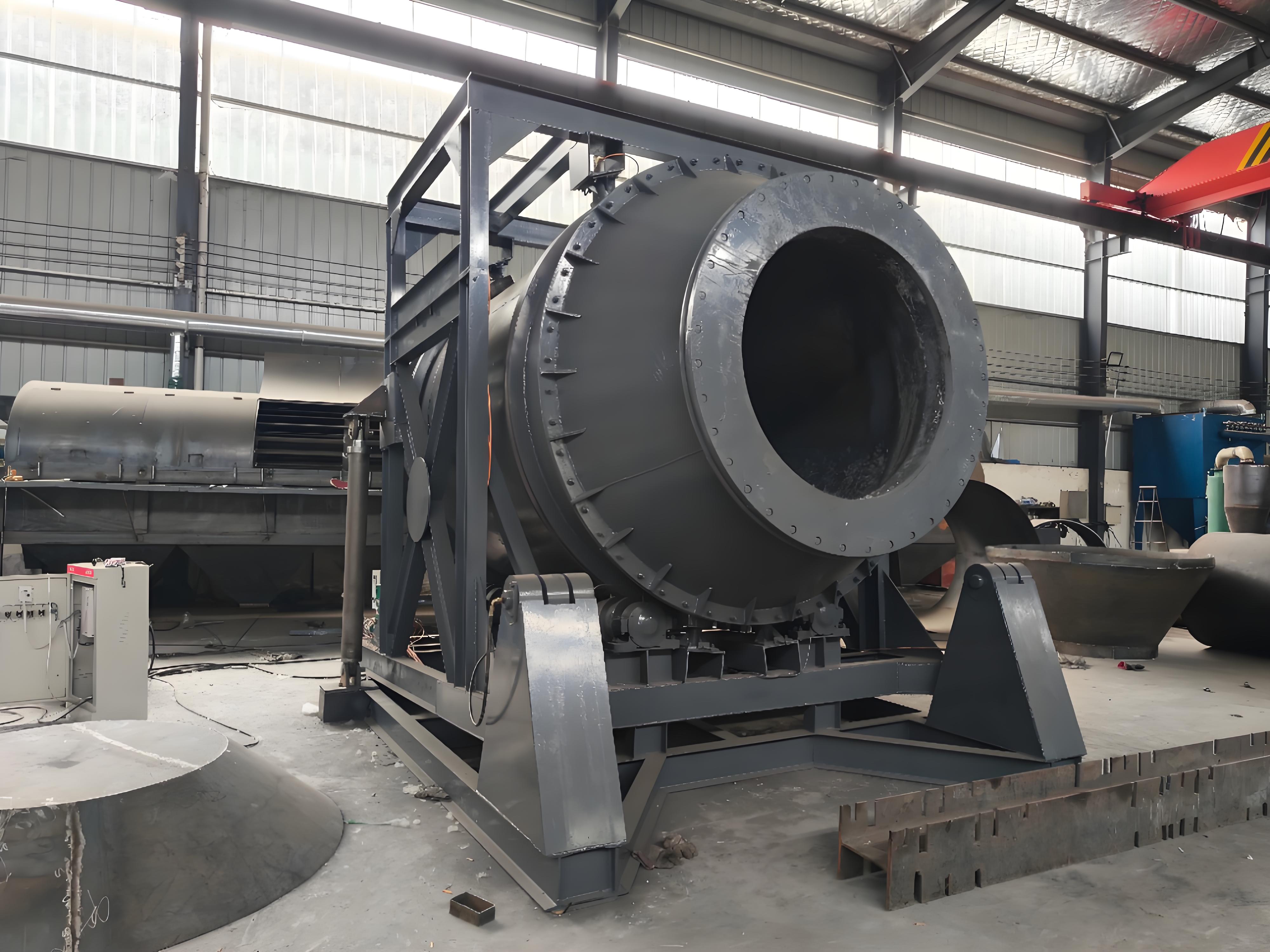
Sealing Technology
Rotary furnaces operate under conditions of high temperature, negative pressure, or positive pressure. Effective sealing serves to prevent external air from entering the furnace—thereby avoiding oxidation reactions that could compromise the purity of the antimony—while simultaneously preventing the leakage of hazardous gases from within the furnace. This ensures a safe working environment and minimizes atmospheric pollution. By incorporating advanced sealing structures and materials, sealing performance is significantly enhanced, thereby guaranteeing the stability of the reaction environment within the furnace.
Heating Technology
Precise control over heating temperature and temperature distribution is paramount; as the temperature requirements for different reaction stages vary, the adoption of an appropriate heating method ensures that the reaction proceeds along its intended pathway. By utilizing electric or gas heating systems featuring independent multi-zone temperature control, temperatures in each zone can be flexibly adjusted in accordance with process requirements, thereby ensuring a complete and uniform reaction and enhancing the recovery rate of antimony.
Rotation and Stirring Mechanism
The rotation of the rotary furnace causes the materials to continuously tumble and mix, thereby increasing the reaction contact area and facilitating the chemical reaction. Appropriate rotational speeds and agitation methods prevent material agglomeration and ensure reaction uniformity. By optimizing the design of the rotary furnace's transmission system and agitation mechanisms, highly efficient material mixing and uniform reactions can be achieved, thereby enhancing smelting performance.
In summary, sealing technology, heating technology, and the mechanisms for rotation and agitation complement one another, collectively forming the core of process control in rotary furnace operations; they play a decisive role in ensuring the efficient and high-quality production of antimony through pyrometallurgical methods.