



NEWS&EVENTS
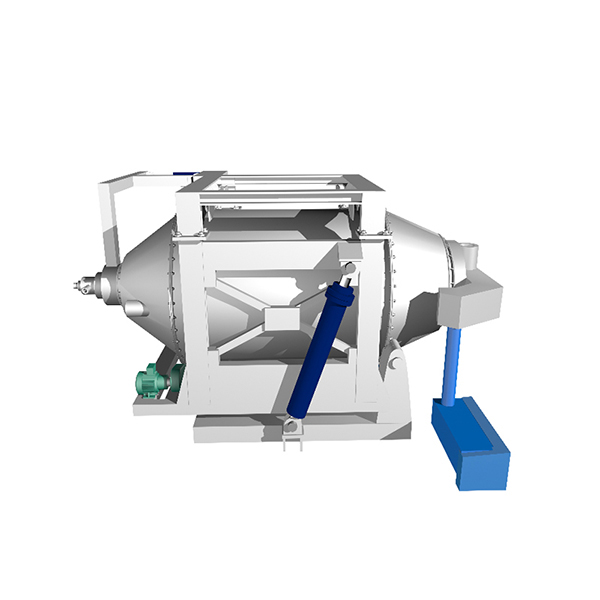
During the operation of antimony rotary furnaces, the phenomenon of "ringing" seriously impacts production efficiency and equipment life. Ringing occurs when molten material or low-melting-point eutectics adhere and accumulate on the furnace lining, forming a ring-shaped nub. Its main causes are as follows:
1. Localized Overheating
Antimony rotary furnaces rely on precise temperature control. Improper temperature control can lead to excessively high temperatures in certain areas of the furnace, causing the charge or product (such as Sb?O?) to melt or soften near the furnace walls due to the high temperatures. The molten material is highly viscous and easily adheres to the furnace lining, accumulating over time to form ringing.
2. Raw Material Issues
If the ore or reducing agent contains excessive amounts of low-melting-point impurities, such as PbO or alkaline components, these impurities react chemically with the refractory materials under the high temperatures within the furnace, forming a viscous liquid phase. This highly fluid liquid phase flows along the furnace lining and adheres, gradually thickening to form ringing. This not only affects material flow within the furnace but also erodes the refractory materials, shortening the service life of the furnace lining.
3. Operational Fluctuations
During rotary furnace operation, sudden changes in feed rate, rotational speed, or temperature can disrupt the normal material flow and thermal balance within the furnace. For example, a sudden increase in feed rate can cause material accumulation within the furnace, making it difficult for localized heat to dissipate and leading to abnormally high temperatures. Changes in rotational speed can affect material tumbling and mixing within the furnace, resulting in uneven material distribution. Temperature fluctuations can also cause material instability. These factors interact to cause material to adhere to the furnace lining, ultimately causing ring formation in antimony rotary furnaces.