



NEWS&EVENTS
Home > News&Events > Company news > Recycled copper pyrometallurgy-electrolytic refining equipment and process
Recycled copper smelting equipment plays a key role in processing waste materials with complex compositions that are difficult to directly utilize. Its core production process is similar to the latter stage of traditional primary copper smelting.
The first step is pretreatment and batching. This step directly impacts subsequent smelting efficiency and product quality. Large scrap parts are first disassembled manually or mechanically to separate non-copper components. Crusher equipment and other equipment are then used to break up the scrap, which is then enriched through magnetic separation, air separation, and eddy current separation. Finally, the sorted scrap is compacted to facilitate loading into the furnace and minimize oxidation and metal loss during the melting process. The coordinated efforts of relevant equipment ensure the smooth progress of this process.
The second step is pyrometallurgical smelting. The pre-treated scrap is then fed into a metallurgical furnace using specialized smelting equipment to remove most impurities and produce blister copper or black copper (approximately 80-95% copper content). Common furnace types, such as anode furnaces, can process high-grade scrap copper, combining both melting and refining functions. Tilting furnaces and reverberatory furnaces are the mainstream for processing low-grade scrap copper. Impurities are oxidized through reactions within the equipment and then transferred to the slag or recovered.
Step 3: Casting anode plates. Qualified copper liquid (grade increased to 99.2% - 99.5%) after fire refining is cast into anode plates in preparation for electrolytic refining.
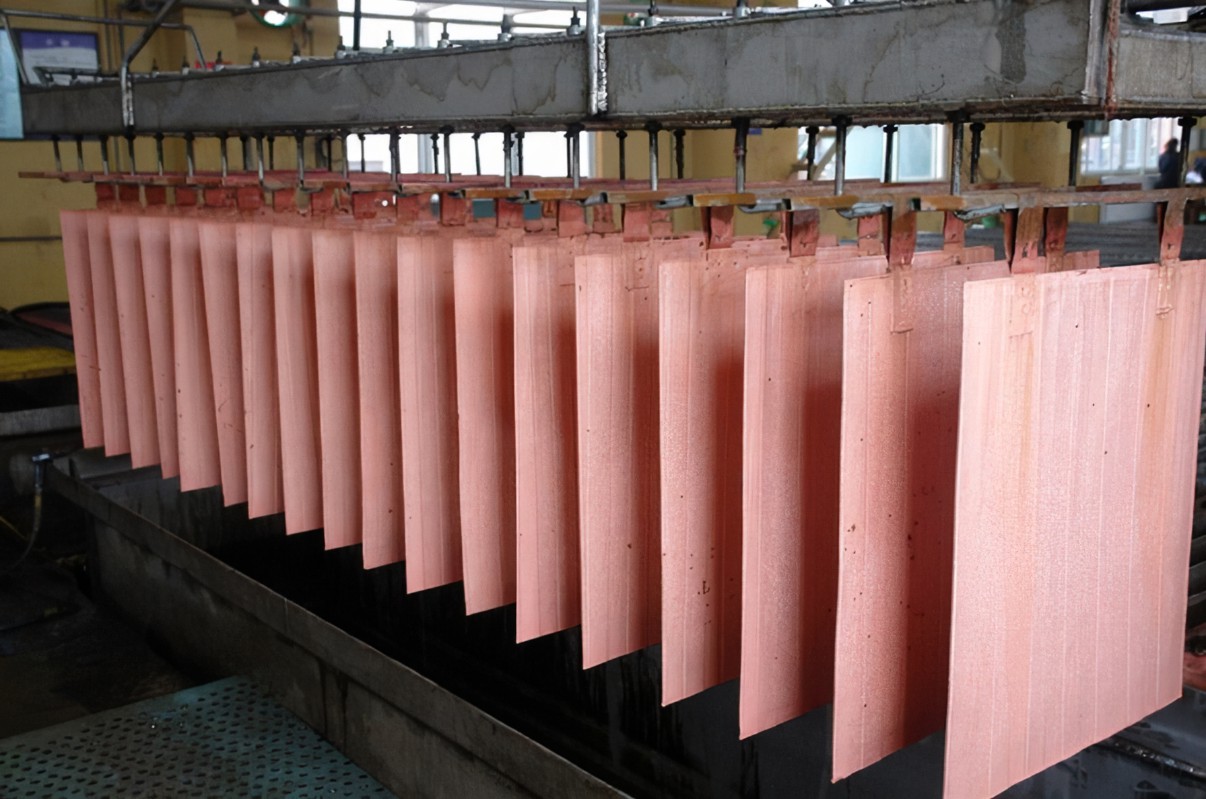
Step 4: Electrolytic refining. Using electrolytic equipment, the anode plate and pure copper starter sheet are placed in the electrolytic cell. When electricity is applied, the copper is separated from the impurities, resulting in high-purity cathode copper (>99.95%).
Step 5: Subsequent processing: The cathode copper produced can be sold directly after being processed by relevant equipment, or it can be melted and cast into copper materials.
Throughout the entire recycled copper smelting process, equipment must not only ensure production but also prioritize environmental protection. Flue gas treatment equipment treats flue gas containing dust and harmful gases, ensuring compliance with emission standards. Slag treatment equipment recycles slag containing small amounts of copper, with the remainder used for building materials. Wastewater treatment equipment neutralizes wastewater from the electrolysis workshop for recycling or discharge in compliance with emission standards.