



NEWS&EVENTS
Home > News&Events > Company news > Effect of Raw Material Pretreatment on Antimony Refining in Rotary Furnace
Raw material pretreatment is a critical step in the front-end of antimony ore processing and significantly impacts rotary furnace antimony smelting.
First, particle size control is crucial. Appropriate raw material particle size is essential for efficient and stable rotary furnace operation. Excessively large particle size reduces contact area with the reducing agent and heat, resulting in slow reaction and prolonged cycle times, reduced processing capacity, and increased energy consumption. Excessively small particle size, at high temperatures, easily generates dust, clogging pipes, increasing equipment wear, and reducing the recovery rate of valuable components. Controlling particle size through pretreatment processes such as crushing and screening ensures uniform raw material distribution, accelerates reaction rates, and improves smelting efficiency.
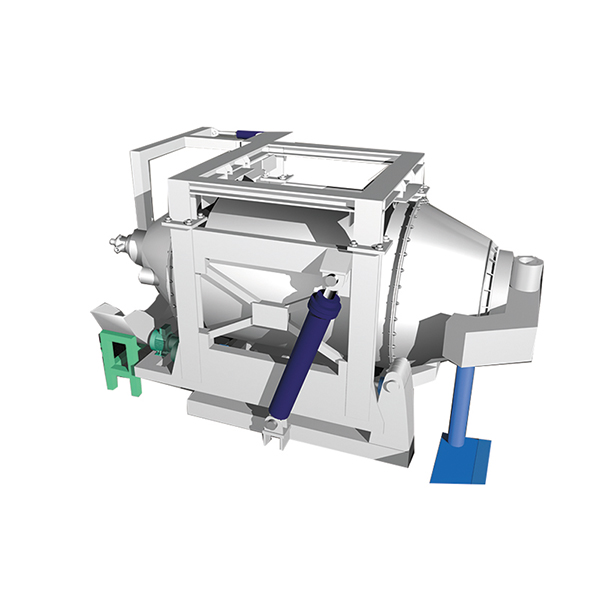
Second, chemical composition pretreatment is crucial. Impurities in antimony ore can affect antimony reduction and product quality, complicating refining and increasing costs. Pretreatment processes such as beneficiation and flotation can remove some impurities and improve the grade of the antimony ore. High-grade raw materials produce high-purity crude antimony metal, reducing the burden of subsequent refining, improving product quality and market competitiveness, reducing pollution, and promoting sustainable development.
Third, pretreatment of moisture content is crucial. Excessive moisture in the raw materials can cause evaporation and heat absorption, leading to temperature fluctuations in the furnace, affecting reaction stability, forming aerosols, making flue gas treatment more difficult, and damaging refractory materials. Drying to control moisture content can ensure stable furnace temperature, improve antimony smelting efficiency, and enhance product quality.
In summary, raw material pretreatment profoundly impacts rotary furnace antimony smelting in terms of particle size, chemical composition, and moisture content. A scientific and rational pretreatment process provides high-quality, stable raw materials, ensuring efficient, environmentally friendly, and stable operation of the rotary furnace, and enhancing both the economic and environmental benefits of the industry.