



NEWS&EVENTS
Home > News&Events > Company news > The role of diaphragm device in slurry electrolysis antimony equipment
In the slurry electrolysis antimony equipment, the diaphragm device is the core component, which is crucial to the stability, efficiency and product quality control of the electrolysis process. The specific functions are as follows:
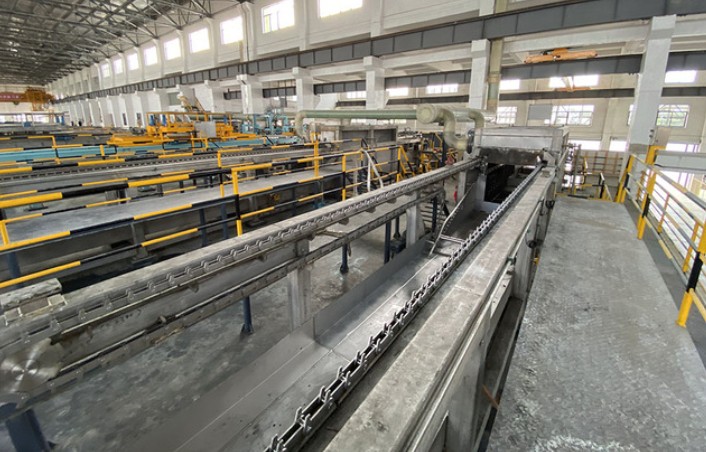
1. Physically isolate the anode area and the cathode area to prevent product mixing.
The diaphragm separates the electrolytic cell with permeable materials to prevent direct mixing of the two polar products. In the anode area, metal minerals (such as antimony ore) are oxidized and leached to generate metal ions (such as Sb3?) that enter the electrolyte; in the cathode area, metal ions are reduced and deposited on the cathode surface to form metal antimony. This effect can avoid direct reaction between anode oxidation products (such as oxygen) and cathode reduction products (such as hydrogen or metals), prevent energy loss and side reactions (such as explosion risks), and ensure safe and efficient electrolysis.
2. Selectively permeate ions to maintain the purity of the electrolyte.
The diaphragm allows specific metal ions (such as Sb3?) to pass through, and blocks impurity ions (such as Fe3?, Cu2?) or suspended particles from entering the cathode area. This can not only improve the purity of metal, reduce the deposition of impurities on the cathode, and improve the quality of antimony products; it can also optimize the electrolysis efficiency, maintain the stability of the cathode liquid composition, and reduce the impact of impurities on the current efficiency.
3. Fix the position of the diaphragm to reduce mechanical loss.
The diaphragm bag is fixed by internal and external diaphragm racks, and the diaphragm is fixed in the middle position by the grid rack and the crossbeam. This can reduce shaking friction, avoid diaphragm swing during stirring, and extend the service life (from replacement every 7 days to 3 months); it is also convenient for cleaning and maintenance. The internal diaphragm rack can be lifted out separately to clean the antimony dropped from the cathode plate without stopping the tank, ensuring production continuity.
4. Optimize the ion migration path and reduce energy consumption. The diaphragm controls the direction of ion migration, reduces the voltage drop of the electrolyte, reduces the tank voltage, and reduces energy loss; at the same time, it promotes the preferential deposition of the target metal ion (Sb3?), reduces invalid side reactions, and improves current efficiency.
5. Support the processing of complex multi-metallic ores. In slurry electrolysis, the diaphragm device combines the electro-oxidation sequence of metal sulfides in the anode area with the potential difference of metal precipitation in the cathode area to achieve multi-metal selective separation, providing technical support for the treatment of complex antimony ores (such as those containing copper, lead and other impurities) and improving the comprehensive utilization rate of resources.
The diaphragm device has become a key component of slurry antimony electrolysis equipment through multiple functional support. Its design improvement further enhances the durability and convenience of equipment operation, and promotes the industrial application of slurry electrolysis technology in the field of antimony metallurgy.