



NEWS&EVENTS
Home > News&Events > Company news > Effect of "two-phase separation technology" in extraction tank on extraction of electrolytic copper waste liquid
Two-phase separation technology is a key link in the extraction tank to achieve the purification of electrolytic copper waste liquid, especially in the key links such as copper ion recovery, impurity removal and solvent regeneration. The following is a detailed analysis of the core role of two-phase separation technology:
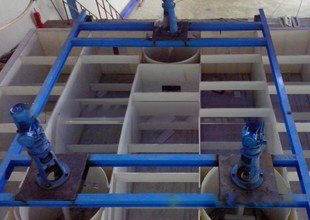
(1) Selective extraction of copper ions
Organic phase design: Use copper selective extractants (such as LIX series, ketoxime extractants) to transfer Cu2? from the aqueous phase (waste liquid) to the organic phase through two-phase contact.
Separation effect: After the two phases are efficiently separated, the copper-rich organic phase enters the stripping process, and the copper-free aqueous phase can be further processed or discharged.
(2) Separation of impurity metals
Phase regulation: By adjusting the pH value (such as controlling pH=1.5~2.5), the extraction of impurity metals such as Fe3? is suppressed and retained in the aqueous phase.
Interface control: Accurate phase interface separation can prevent impurities from being entrained in the organic phase and ensure the purity of the copper product.
(3) Recycling of solvents
Organic phase regeneration: The lean organic phase after stripping needs to be completely separated from the aqueous phase to prevent residual acid or metal ions from affecting the next round of extraction efficiency.
Reducing solvent loss: High separation efficiency can reduce organic phase entrainment loss and reduce operating costs.
Advantages and characteristics of the "two-phase separation technology" of the extraction tank:
1. Efficient recovery: The two-phase separation technology can achieve a copper recovery rate of >98%, and the purity of electrolytic copper after stripping reaches more than 99.95%.
2. Environmental protection: The copper concentration of the waste liquid after copper removal can be reduced to below 10 ppm, meeting the industrial wastewater discharge standard.
3. Cost control: The organic phase recycling rate is >99%, and the solvent replenishment amount is reduced by 50%~70%.
The two-phase separation technology of the extraction tank is the core guarantee for the resource treatment of electrolytic copper waste liquid. Through precise two-phase separation control, it achieves efficient copper recovery and deep removal of impurities.