



NEWS&EVENTS
Home > News&Events > Company news > Effect of wet ball mill slurry particle size on antimony ore electrolysis efficiency
In the electrolysis process of antimony ore, the slurry particle size has a significant impact on the electrolysis efficiency. As a commonly used pre-treatment equipment, the wet ball mill can effectively control the slurry particle size and thus improve the electrolysis efficiency. The following is a detailed analysis:
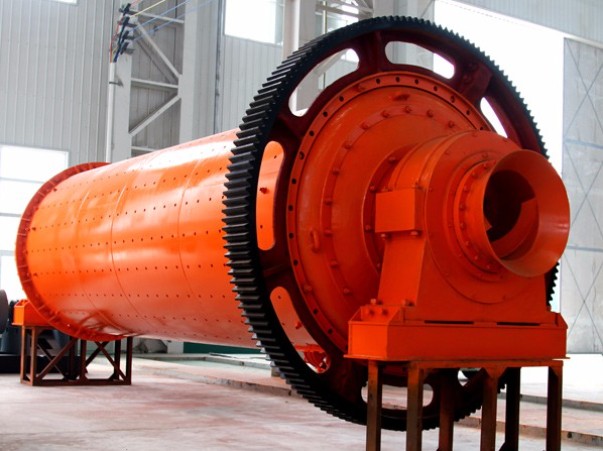
1. The core role and mechanism of the wet ball mill
(1) Crushing and grinding principle
The wet ball mill uses the rotation of the cylinder to drive grinding media such as steel balls or ceramic balls to crush the ore through impact, shear and friction. In the treatment of antimony ore (such as stibnite Sb2S?), its main goal is to crush the ore to a suitable particle size range of 80~200 mesh (0.075~0.178 mm), while avoiding over-crushing (<400 mesh) that causes a sharp increase in slurry viscosity.
(2) Advantages of wet grinding
Compared with dry grinding, the wet method can significantly reduce dust pollution, reduce grinding heat through water medium lubrication, and prevent antimony minerals from forming insoluble oxides (such as Sb2O?) due to high-temperature oxidation, thereby improving the subsequent leaching rate.
2. Effect of slurry particle size on electrolysis efficiency
(1) Particle size uniformity: Uniform slurry particle size helps to evenly distribute the current during the electrolysis process and reduce local overheating or incomplete reaction.
(2) Particle size: Smaller particle size increases the contact area between the ore and the electrolyte, speeds up the reaction rate, and improves the electrolysis efficiency. However, too small particle size may increase the viscosity of the slurry and affect fluidity.
3. Precautions in practical application
(1) Equipment maintenance: Regularly maintain the wet ball mill to ensure its normal operation.
(2) Process parameter optimization: Optimize parameters such as grinding time, medium and slurry concentration according to ore characteristics.
(3) Energy consumption control: Under the premise of ensuring the grinding effect, minimize energy consumption and improve economic benefits.
The impact of the wet ball mill on the electrolysis efficiency of antimony ore is multi-dimensional, and it is necessary to comprehensively balance particle size distribution, energy consumption, equipment life and environmental protection requirements. By optimizing the slurry particle size, the electrolysis efficiency can be significantly improved. Reasonable control of parameters such as grinding time, medium and slurry concentration can further improve the overall process effect.